
A cross case synthesis of distributed sensing, mobility and response requirements
Abstract
Field applications often operate where central communication infrastructure is unreliable or absent. The MESH2026 report outlines eleven use cases involving perimeter awareness, vehicle tracking, hazardous areas, radiation and chemical monitoring, acoustics, environment, logistics and mobile platforms. This paper organizes those cases into common architecture patterns and evaluates them against data freshness, connectivity, security, power and integration requirements. A use case matrix distinguishes periodic environmental reports from time critical alerts and mobile tracking. The contribution is a framework for prioritizing pilot deployments and measuring operational fitness, rather than a claim of real-world deployment success. Figures are schematic, and application acceptance criteria remain to be established by each operator.
Keywords: wireless mesh networks; sensor networks; mesh field applications; analytical modeling; reliability; network design.
1 Introduction
Wireless mesh designs connect nodes using multiple wireless links and forwarding relays, but the existence of an alternate link does not by itself guarantee end to end service. Performance depends on radio quality, control traffic, source reporting rates, topology changes and gateway capacity. This study addresses one distinct subset of those coupled design concerns, using the models and engineering constraints developed in MESH2026-v07. Its findings are analytical statements with explicit assumptions rather than claims about a completed controlled deployment.
The objective is to define a technically traceable decision framework that converts the supplied study into testable engineering criteria. The manuscript draws solely on the source report and bibliographic entries present in that report. References retain the original source numbering so each item can be reconciled directly with the underlying bibliography. No new externally obtained sources are introduced.
2 Analytical Scope and Method
The method proceeds by identifying the system boundary, selecting a small number of measurable state variables, deriving a simplified relationship or comparison, and then distinguishing mathematical consequences from assumptions that require experimental verification. Conceptual drawings show component or information relationships; calculated charts visualize nominal conditions. They are not field measurements. This separation is especially important in wireless systems, where terrain, interference, retransmission policy and time synchronization can dominate apparent theoretical advantage.
Source basis: MESH2026-v07, sections 3.4.7–3.4.8, 3.6–3.8, 5.1–5.11. Reference numbers preserve the numbering of its chapter 7 bibliography. The analytical figures are original illustrations of stated assumptions, not experimental observations.

Figure 1. Functional architecture developed from the relevant MESH2026 concepts; schematic, not a tested implementation.
3 The value proposition is resilient sensing
Distributed mesh sensors can help collect environmental and operational events from sites where a permanently installed communications backbone is difficult to deploy. The source document includes a linear perimeter scenario, tracking of equipment in a closed area, records supporting demining, spatial radioactivity and chemical monitoring, acoustic detection, radio monitoring, broad area meteorology, ammunition handling, unmanned vehicles and sensor-equipped personnel. These are candidate architectures, not validated deployments.
The requirements differ sharply. A hazardous substance alarm must deliver a trustworthy near real-time event, while periodic weather logging can tolerate longer intervals and delayed delivery. Equipment tracking is affected by movement, whereas a fixed perimeter may be dominated by deliberate link obstruction or relay failure. Thus one universal mesh profile cannot serve every application at equal efficiency. The network should be configured around the operational meaning of a received record. [1], [71].
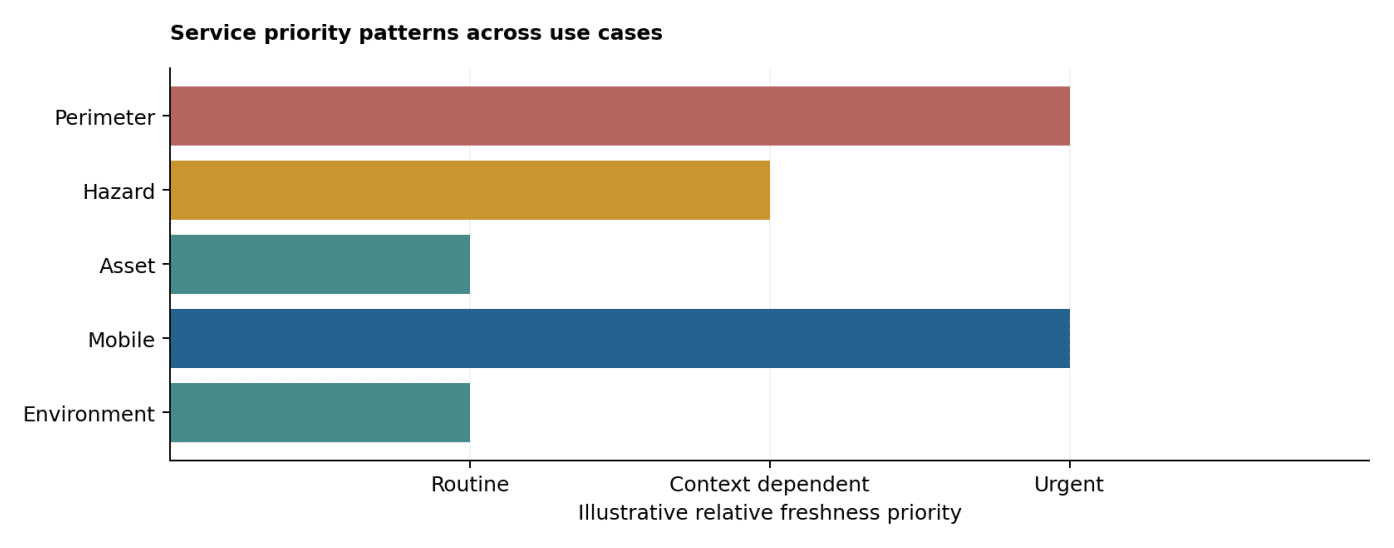
Figure 2. Calculated or qualitative illustration of the design mechanism. Axes and assumptions are described in the main text.
4 Common architecture patterns
Three patterns cover many source use cases: a linear fixed sensor chain that forwards to sector gateways; a dispersed areal mesh that adapts to irregular terrain; and a hybrid fixed/mobile network that tolerates intermittent visits from vehicles or portable devices. A fourth practical layer provides mapping, alarms and integration into an operator system. Network service semantics need to be clear at this integration boundary: packet received, alarm accepted and operator notified are three different events.
A field architecture may include local storage for disconnected operation. Delayed packets can support historical analysis but cannot necessarily satisfy a live warning deadline. Timestamps, origin identifiers and provenance must survive forwarding. A command to a remote node needs stronger integrity and authentication guarantees than an uncritical environmental sample, especially if delayed delivery might cause unintended later action. [23], [50].
Table 1. Scope of the principal design comparison.
Application cluster Freshness expectation Dominant acceptance question
Is the alarm timely and Perimeter / acoustic alerts Prompt notification attributable?
Is data calibrated and correctly Hazard / environment Task-dependent sampling timed?
Asset / ammunition logistics Traceable periodic events Is chain of custody complete?
Does mobility preserve useful Vehicles / UAV / personnel Dynamic state updates?
Disrupted connectivity Historical recovery Are stale records identifiable?
5 Operational requirements by application
Perimeter use cases prioritize alert latency, geographically precise node identity and continuity after a relay failure. Hazardous chemical and radiation sensing prioritize measurement quality, threshold handling, timestamp integrity and resistant packaging. Asset logistics require battery endurance and traceable events through storage and transport. Vehicle and personnel monitoring add mobility, intermittent connectivity and sensitive location data. The communication architecture must not be mistaken for the sensor calibration or operational decision system.
Integration into systems such as maps or command displays should make stale data visible. A reported location from several hours earlier is not a current track. Likewise, a sensor that is electrically alive but unable to deliver telemetry cannot be considered fully available. Application service metrics should include age of the newest valid observation, location and timestamp accuracy, route outage duration and confidence in the originating sensor. [70], [82], [83].
6 Security, energy and environmental tradeoffs
A durable field node must work across environmental conditions and preserve identity under replacement, loss and repair. The source manuscript discusses climate, ingress, vibration and military test frameworks, but these documents do not themselves certify a finished system. Security requirements include authenticated joining, integrity protection, safe update and controls appropriate to possibly exposed hardware. A system that silently loses data because of depleted relays undermines both safety and security.
Report rates should be linked to urgency. A dormant perimeter sensor may send health summaries infrequently but switch temporarily to an alarm profile when detecting an event. Regional environmental stations may favor scheduled batches. Combining high-frequency alarms with multi- hop sharing can overload relay sectors, so the scheduler should reserve capacity and limit the duration of accelerated reporting. [84], [90], [98], [100], [122].
Evaluation parameters
A reproducible trial should log per-node packet identifiers, generation and reception timestamps, route changes, radio retransmissions, queue age and battery current. All measurement and reporting intervals, payload formats, antenna geometry and firmware revisions should be recorded. Reliability must be reported with variation over trials, not as a single best-run percentage. A successful link in one season or installation position is not equivalent to a verified network-level service guarantee.
7 Pilot program and limitations
A meaningful pilot should start with one fixed line, one area monitoring field and one mobile task, each with declared service thresholds. For each, record delivery completeness, alert delay, time synchronization, energy per role, topology change and sensor-specific measurement quality. Repeat deliberate interference and physical relay loss, document firmware versions and test integration of delayed records. Operators should evaluate both information usefulness and device endurance.
This work does not assert that the eleven use cases have been implemented, nor that one networking architecture meets all of them. It translates the supplied concepts into measurable acceptance criteria. Pilot outcome should determine which profiles and sensors are suitable for scaling. [2].
8 Reproducible Experiment Design
Cross application pilot acceptance
Select a linear perimeter event, an environmental monitoring deployment and a mobile tracking scenario. For each, declare an information freshness threshold and test whether relays, storage and the operator display preserve sensor identity and timestamp. Introduce a communication outage, then check how delayed records are labelled when backhaul resumes. Report useful operator outcomes separately from physical packet reception.
All trials should state the hypothesis before measurements begin. In particular, baseline and modified networks must generate a comparable number of application messages under identical payload semantics. Time synchronization, radio configuration, antenna placement and test duration should be documented. Apply a predefined definition of a valid delivery, including how duplicate frames, acknowledgements, partial packets and expired records are treated. Report distributions and uncertainty rather than interpreting isolated examples as population-level network behavior.
The primary measurement vector is: Time to operator alert, age of last valid sample, data completeness, battery life, and provenance of records. The experiment should archive raw records and configuration files so that independent reviewers can reconstruct packet success, route depth and energy exposure. Failed configurations and unavailable nodes must remain in the results table rather than being discarded as outliers. Where an event is delayed by buffering, store both the origin timestamp and the gateway arrival timestamp to avoid falsely classifying a stale packet as timely delivery.
9 Model Sensitivity and Acceptance Criteria
A design parameter has operational meaning only relative to an application threshold. For packet delivery, an acceptable loss ratio may differ between a periodic weather reading and an emergency alarm. For latency, a median value can be misleading when occasional extreme delay is harmful. Therefore the acceptance plan should name the threshold and its aggregation level: individual node, gateway sector or whole deployment. At minimum, retain a reliability target, a maximum age for useful data, and a minimum expected autonomy for each energy role.
Sensitivity analysis should vary one major assumption at a time and then test coupled effects. Candidate variables include per-hop reception probability, reporting frequency, number of downstream children, active listening duration, gateway count and available battery capacity. An improvement observed under one parameter combination may disappear when the network is congested or when temperature reduces battery availability. The purpose of a sensitivity plot is to identify which physical measurement would most change the final design decision, not to predict field performance without evidence.
A network can deliver packets correctly while still failing its application task through stale information or poorly calibrated sensors.
A final acceptance matrix should include four outcomes: the test condition, the expected service limit, the observed numerical result and the engineering decision. The source technical study supports the selection of variables and design mechanisms, but a numerical pass/fail result requires an actual implemented protocol and controlled measurements. The distinction prevents a model assumption from being silently promoted to verified specification.
Evaluation scenario matrix
Scenario Variable held constant Question to resolve
Same radio / payload / gateway Does the reference service meet its Nominal baseline position target?
Same node count and physical Does age or packet loss rise before a Increased offered traffic layout stated limit?
Can useful records still reach the Relay or link interruption Same sensor sample generation gateway?
Same routing and application Which role becomes the limiting Reduced energy reserve service component?
Does adaptation improve the Configuration change Same declared application goal system-level outcome?
The nominal baseline provides a necessary denominator for every claimed improvement. A second, more demanding workload should keep the number and location of devices unchanged, which helps isolate the effect of the altered report rate or route policy. The failure trial should define in advance whether losing the first packet after an outage counts as unacceptable service or whether a bounded recovery period is allowed. A device can legitimately buffer packets for later transfer, but the resulting data age must be visible in the assessment.
Energy experiments should compare the same battery assumptions and device roles. A measured reduction in the charge consumed by a leaf node may be offset by increased listening or forwarding costs in its parent. The appropriate system measure is therefore not simply the largest lifetime estimate in the network; it is the minimum acceptable service continuity across critical coverage points. Temperature, battery cutoff and intermittent backhaul availability may change which node becomes critical even when network geometry is unchanged.
Finally, sensitivity should be reported as an envelope rather than an unexplained single-number promise. State which parameters were deliberately changed, identify the origin of every numerical assumption, and preserve the complete measured distribution if physical tests are later performed. When the source provides only theoretical values, label the result a calculation or hypothesis. This audit trail makes the framework useful for deciding the next experiment and reduces the risk that an optimistic reference scenario will be mistaken for a certified operating limit.
10 Discussion
The analysis points to a recurring challenge: radio reach, packet reliability, bounded latency and energy endurance are not independently optimizable in a shared forwarding network. Improving one dimension can worsen another. Greater redundancy adds possible routes but can increase scanning or contention. More frequent reporting improves data freshness but increases relay burden. Stronger integrity protection changes frame overhead and configuration responsibilities. These effects require a scenario specific performance contract before hardware or protocol claims can be generalized.
The most defensible next step is a measured comparison with a declared baseline and pre- registered acceptance thresholds. Test design should preserve the conditions under which the mathematical assumptions are approximately valid, document deviations, and present limits as prominently as advantages. This article supplies an analytical framework suitable for subsequent empirical investigation but does not claim experimental superiority or compliance certification.
11 Conclusion
The MESH2026 material supports a structured analytical treatment of resilient mesh sensing architectures for safety monitoring and critical field operations. The resulting framework separates topology, traffic, radio and energy constraints, supplies scenario dependent decision criteria, and defines a path to experimental verification. The final engineering choice should be guided by the application’s maximum data age, required delivery probability, actual relay workload and maintainability under failure. Numerical examples are conditional calculations, and validation against physical deployments remains necessary.
References
[1] A. Cilfone et al., “Wireless Mesh Networking: An IoT-Oriented Perspective Survey on Relevant Technologies,” Future Internet, 11(4), 99, 2019. DOI 10.3390/fi11040099.
[2] D. Benyamina et al., “Wireless mesh networks design—A survey,” IEEE Communications Surveys & Tutorials, 14(2), 299–310, 2012. DOI 10.1109/SURV.2011.042711.00007.
[23] R. P. Centelles et al., “Beyond the Star of Stars: An Introduction to Multihop and Mesh for LoRa and LoRaWAN,” IEEE Pervasive Computing, 20(2), 63–72, 2021. DOI 10.1109/MPRV.2021.3063443.
[50] J. R. Cotrim and J. H. Kleinschmidt, “LoRaWAN Mesh Networks: A Review and Classification of Multihop Communication,” Sensors, 20(15), 4273, 2020. DOI 10.3390/s20154273.
[70] T. G. Durand and M. J. Booysen, “Performance Evaluation of a Mesh-Topology LoRa Network,” Sensors, 25(5), 1602, 2025. DOI 10.3390/s25051602.
[71] D. Rodenas-Herraiz et al., “Current Trends in Wireless Mesh Sensor Networks,” Sensors, 13(5), 5958–5995, 2013. DOI 10.3390/s130505958.
[82] V. Cerf et al., Delay-Tolerant Networking Architecture, RFC 4838, 2007. DOI 10.17487/RFC4838.
[83] S. Burleigh et al., Bundle Protocol Version 7, RFC 9171, 2022. DOI 10.17487/RFC9171.
[84] E. Birrane and K. McKeever, Bundle Protocol Security, RFC 9172, 2022. DOI 10.17487/RFC9172.
[90] T. Tsao et al., A Security Threat Analysis for RPL, RFC 7416, 2015. DOI 10.17487/RFC7416.
[98] M. Fagan et al., IoT Device Cybersecurity Capability Core Baseline, NISTIR 8259A, 2020. DOI 10.6028/NIST.IR.8259A.
[100] IEC 60529, Degrees of protection provided by enclosures (IP Code), ed. 2.2, 2013.
[122] NATO, STANAG 4370 Environmental Testing, Revision 8, 2025.
[M] MESH2026-v07. Technical study, sections 3.4.7–3.4.8, 3.6–3.8, 5.1–5.11. Unpublished technical material.
Pridaj komentár